44 disklabel type dos
"fdisk -l" output: what are Disk label type" and "Disk identifier" The disk identifier is a randomly generated number stuck onto the MBR. In terms of tools for looking at disks, fdisk is on its way to being deprecated if it isn't already so. parted is the replacement for fdisk and gparted can be used to provide a graphical interface to parted (although certainly other tools exist as well). Share Full Disk Encryption - Void Linux Handbook First, generate a random key. # dd bs=1 count=64 if=/dev/urandom of=/boot/volume.key 64+0 records in 64+0 records out 64 bytes copied, 0.000662757 s, 96.6 kB/s. Next, add the key to the encrypted volume. # cryptsetup luksAddKey /dev/sda1 /boot/volume.key Enter any existing passphrase: Change the permissions to protect generated the key.
Understanding linux fdisk utility - The Geek Diary Using the fdisk Utility. The fdisk utility also provides an interactive interface for manipulating the partition table of a disk device. # fdisk [device_name] Command (m for help): Basic fdisk commands include: - d: Delete a partition. - l: List the known partition types. - m: Print the available commands. - n: Add a new partition.
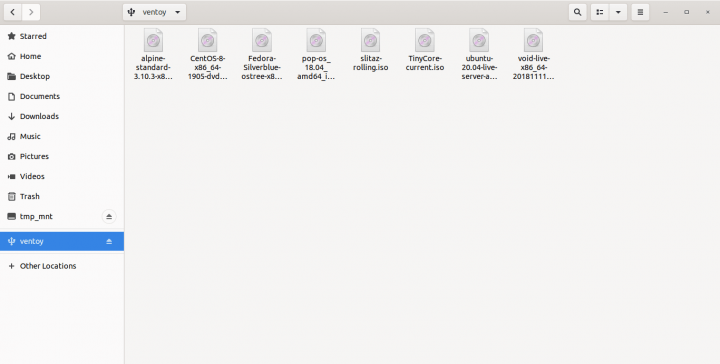
Disklabel type dos
BSD disklabel - Wikipedia FreeBSD and other BSD operating systems can access both the BSD disklabel subdivided partition and the MS-DOS type Extended/Logical partitions. The contents of disklabels BSD disklabels traditionally contain 8 entries for describing partitions. These are, by convention, labeled alphabetically, 'a' through to 'h'. disklabel(8) - NetBSD Manual Pages On systems that expect to have disks with MBR partitions (see fdisk (8) ) disklabel will find, and update if requested, labels in the first 8k of type 169 (NetBSD) MBR labels and within the first 8k of the physical disk. On other systems disklabel will only look at the start of the disk. The offset at which the labels are written is also system ... How to Change Linux Partition Label Names on EXT4 / EXT3 / EXT2 and Swap Commands for changing or modifying Partition Name/ Label are dependent on type of filesystem on that partition with exception of some general commands. Below you can find listing of all such commands. 1. e2label or tune2fs The commands e2label or tune2fs used for changing label of ext2, ext3 and ext4 type partitions.
Disklabel type dos. How to Use mkfs Command in Linux [For Disk Formatting] The letters in mkfs stand for "make file system". The command is commonly used for managing storage devices in Linux. You can think of mkfs as a command line tool for formatting a disk into a specific filesystem. mkfs -t [fs type] [target device] You can also use the mkfs command in the following fashion. mkfs. [fs type] [target device] partition - Changing label type in Arch Linux cfdisk - Unix & Linux ... 1 Answer Sorted by: 0 I've never actually used cfdisk, but I can tell you how to do it with fdisk. Run fdisk -l You should get all of your storage devices. Find the one you want to partition. It should be something like /dev/nvme0n1 or /dev/sda but your knowledge may vary. Once you find it run fdisk . E.x. /fdsik /dev/sda Fdisk command to create and delete partition in Linux Guide 2021 Created a new DOS disklabel with disk identifier 0xc11739be. Command (m for help): When you access the command mode of /dev/sdb, now press "n" command to create a new partition under /dev/sdb with specific size. You can see in the following result. Tutorial - Create and use disks for scale sets with Azure CLI - Azure ... When you select a disk size, the value is rounded up to the next type. For example, if the disk size is less than 128 GB, the disk type is P10. If the disk size is between 129 GB and 512 GB, the size is a P20. Over, 512 GB, the size is a P30. Premium disk performance
Fdisk Command in Linux (Create Disk Partitions) | Linuxize If you have a disk of 2 TiB or larger, use GPT. MBR has a limit of 4 primary partitions. If you need more partitions, one of the primary partitions can be set as an extended partition and hold additional logical partitions. With GPT, you can have up to 128 partitions. GPT doesn't support extended or logical partitions. linuxconfig.org › how-to-resize-ext4-rootHow to resize ext4 root partition live without umount on Linux Nov 28, 2020 · Next, create a new partition right on the top of the previous and ensure that you use same starting sector: Command (m for help): n Partition type p primary (0 primary, 0 extended, 4 free) e extended (container for logical partitions) Select (default p): p Partition number (1-4, default 1): First sector (2048-41943039, default 2048): 4096 Last sector, +sectors or +size{K,M,G,T,P} (4096 ... Dual-boot WIndows 10 (GPT) and Ubuntu 18.04 (DOS): Is that a problem? I have a SSD with Windows 10 and a disklabel type gpt and a HDD with Ubuntu 18 and a disklabel type DOS. I have read that having 2 disks with 2 different OS, and one disk is formatted to gpt and the other to dos can cause problems. I have a Acer Aspire machine, so I only have UEFI settings (there is no option to select legacy boot manager). Crear nueva partición en Linux con VirtualBox - Soy un DBA 6. Digitamos n para crear una nueva partición y elegimos p para que sea una primaria. Command (m for help): n Partition type p primary (0 primary, 0 extended, 4 free) e extended (container for logical partitions) Select (default p): p. 7. En partition number elegimos 1. Partition number (1-4, default 1): 1. 8.
unix.stackexchange.com › questions › 235158how to check the filesystem type of a logical volume Oct 10, 2015 · /dev/vg1/lv1: LABEL="yyyy" UUID="xxxx" TYPE="ext4" From man file:-s, --special-files. Normally, file only attempts to read and determine the type of argument files which stat(2) reports are ordinary files. This prevents problems, because reading special files may have peculiar consequences. disklabel(8) - OpenBSD manual pages The disklabel utility can be used to install, examine, or modify the label on a disk drive or pack. The disk label contains information about disk characteristics (size, type, etc.) and the partition layout, stored on the disk itself. It is used by the operating system to optimize disk I/O and locate the filesystems resident on the disk. Create Boot Partition Layout for a Raspberry Pi - The Tech Journal Open fdisk on your card. fdisk /dev/sda Press "n" to create a partition. Press "p" to make it a primary partition. Press "1" to make it the first partition in the table. Press to accept the default on start sector. Type +size to choose the size. In my case I want 1GB, so I'll type "+1G". After it's created, press "a" to make it bootable. Linux mount command to access filesystems, iso image, usb, network drives 6 commands to list USB devices and check USB ports 1. Journalctl or /var/log/messages 2. lsusb 3. lsscsi 4. lsblk 5. blkid 6. fdisk USB Drive with NTFS File System USB Drive with FAT32 or vFAT File System Mount Network Drive How to unmount file system and other removable devices?
How To Create Multiboot USB Drives With Ventoy In Linux - OSTechNix
How to create a partition table using fdisk - TechOverflow create-a-partition-table-using-fdisk.sh 📋 Copy to clipboard ⇓ Download. sudo fdisk . sudo fdisk . sudo fdisk . again. This time, enter the n command (new partition). When it asks you about the partition type and its size, just press return every time to select the defaults.
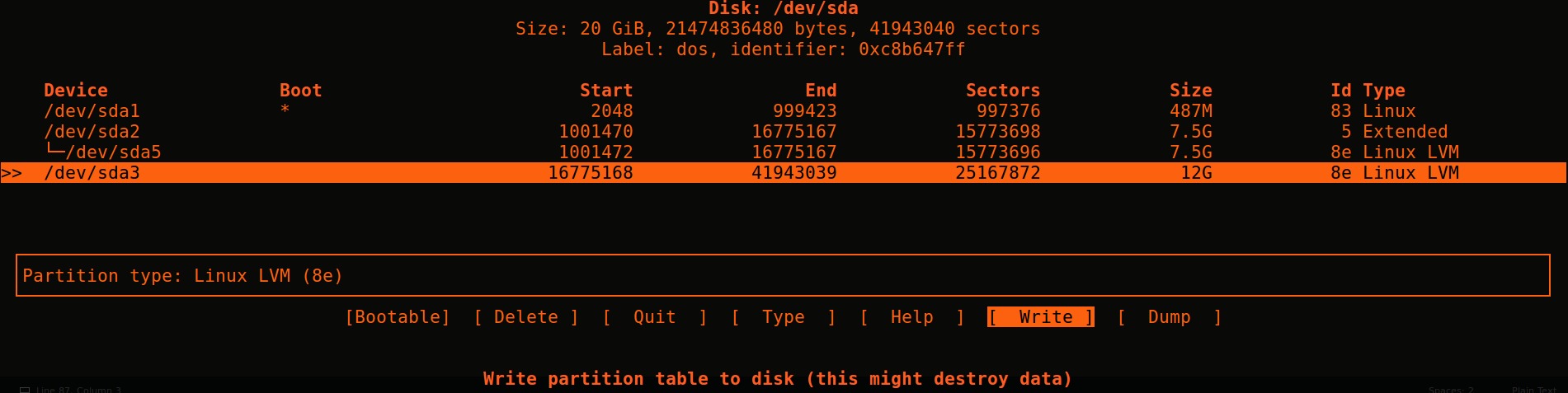
增加安裝Ubuntu的分區大小? - Ubuntu問答
en.wikipedia.org › wiki › Disk_partitioningDisk partitioning - Wikipedia The FAT16 and FAT32 file systems have made use of a number of partition type codes due to the limits of various DOS and Windows OS versions. Though a Linux operating system may recognize a number of different file systems (ext4, ext3, ext2, ReiserFS, etc.), they have all consistently used the same partition type code: 0x83 (Linux native file ...

linux - gparted live CD won't move/resize unmounted partition - Super User
wiki.gentoo.org › wiki › Handbook:AMD64Preparing the disks - Gentoo Wiki Master boot record (MBR) or DOS boot sector. The Master boot record boot sector (also called DOS boot sector or DOS disklabel) was first introduced in 1983 with PC DOS 2.x. . MBR uses 32-bit identifiers for the start sector and length of the partitions, and supports three partition types: primary, extended, and logic

BEGINNER’S GUIDE FOR LINUX: How to Create LVM in Linux CentOS 7 / RHEL 7
Fdisk Command in Linux (Create Disk Partitions) After you've installed a new SSD or hard drive, the first thing you should do is partition it. Before you can format and store files on a drive, it must have at least one partition. To create partitions in Linux, ... 512 bytes / 512 bytes Disklabel type: dos Disk identifier: 0x0001cca3 Device Boot Start End Sectors Size Id Type /dev/sda1 2048 ...

Howto resize Zevenet ADC filesystem with LVM | ZEVENET
How to list, create, delete partitions on MBR and GPT disks - Linux Config To create a new partition on the empty disk, we'll provide it as argument to fdisk : # fdisk /dev/sdb Welcome to fdisk (util-linux 2.32.1). Changes will remain in memory only, until you decide to write them. Be careful before using the write command. The fdisk utility awaits our commands. We would like to create a new partition, so we press "n".
How to use encrypted block storage volumes on Hetzner Cloud - Stan's blog
access.redhat.com › node › 2211741How to Resize a Partition using fdisk - Red Hat Customer Portal Prerequisites. A created partition that you know the name of. To check the name, run cat /etc/fstab.The first field is the name of the partition. The only way to change a partition size using fdisk is by deleting and recreating it so ensure that the information on the file system is backed up.
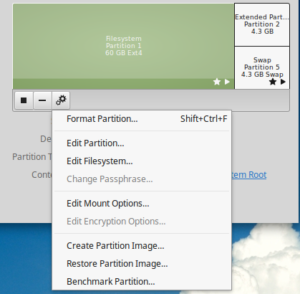
A few ways to list disk information in Linux Mint. | Securitron Linux blog.
Use of disklabel, MBR and GPT - UnitedBSD Thinking about MBR, it actually provides the same information, but in a way the other OSs can understand: the full size of the disk, the size and location of the usable portion(s) of the disk and their structure (all the primary partitions whose type is DOS-compatible). Disklabel and MBR are then just two alternative ways to represent the same ...

Linux extend file system after resize disk volume – linuxhowto.net
How to rename or label a disk drive - Computer Hope In the Properties window, on the General tab, type a new name in the Label box (A), click Apply (B), and then click OK (C). Windows 3.x, MS-DOS, and Windows command line. To change the name of a disk drive from an MS-DOS prompt, use the label command. Type the word label. Type the drive letter you want to rename. Type the new name for the drive.

How to combine two partitions into one? - Unix & Linux Stack Exchange
fdisk: manipulate disk partition table - Linux Man Pages (8) Don't erase the begin of the first disk sector when create a new disk label. This feature is supported for GPT and MBR. -c, --compatibility [= mode] Specify the compatibility mode, 'dos' or 'nondos'. The default is non-DOS mode. For backward compatibility, it is possible to use the option without the mode argument -- then the default is used.
Post a Comment for "44 disklabel type dos"